

Painting like a child.

I was watching a show the other day when a Picasso quote I’d never heard was referenced:
It took me four years to paint like Raphael — but a lifetime to paint like a child.
My first reaction was shock that I’d never heard it before. My second was the embarrassment that it’s probably because I don’t read enough. My third?
Well, yeah.
I thought about the baseball card show I went to with Max and a few of his friends two days ago, and how awesome it was to see that world through 11-year-old eyes, that world that 35 years ago was my own 11-year-old nirvana, a world that on many days I wish I could still paint in.
I thought about Sunny and Buddy and Toby and how the best Rangers cards ever were in 1976 (inspiration for the cover of the 2007 Bound Edition) and 1978 (those awesome shots, especially Sunny and Toby and Mike Hargrove). I thought about Fergie and Gaylord and Bert and Jon. I thought about the Jeff Burroughs trade that made me sad and the Sparky Lyle that made me happy . . . until I realized who Dave Righetti was.

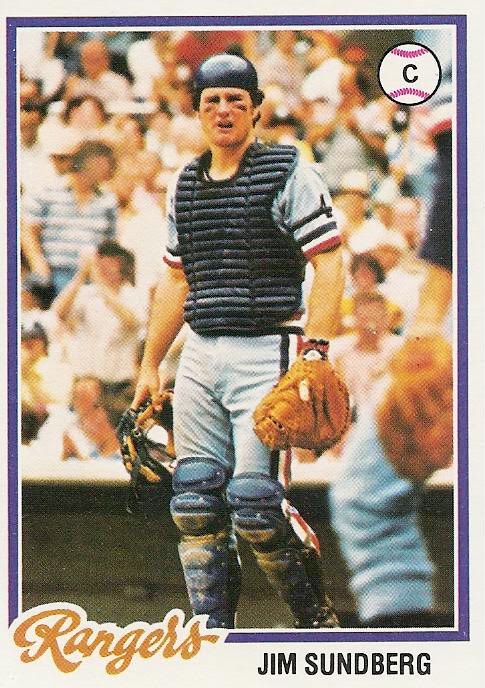
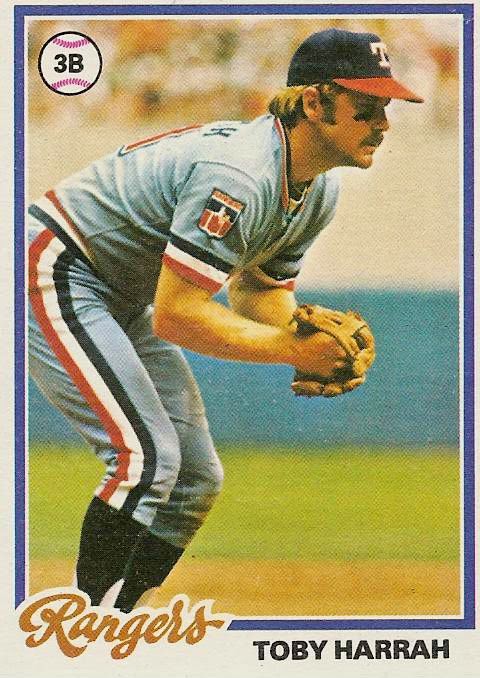
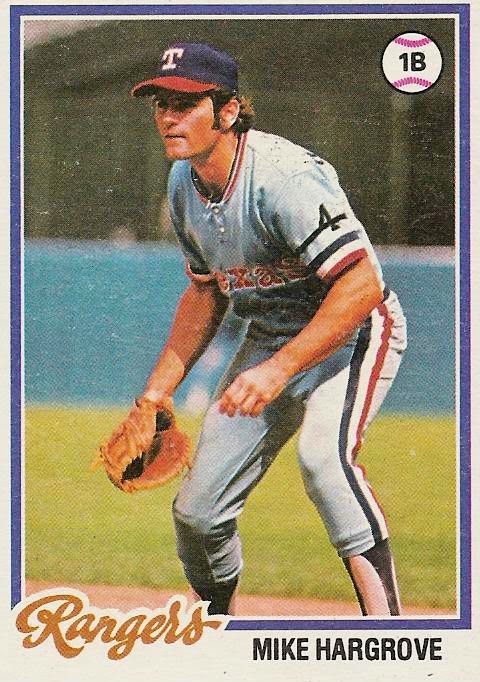
I thought about John Henry Johnson’s incredible Rangers debut and everything it promised (whoops), and I thought about being nearly alone in Port Charlotte in March of 1990, when everyone on a 40-man roster had been locked out of spring training, but there, on a field 100 feet away from the one where Donald Harris and Dan Peltier were taking BP, was the pudgy teenaged catcher whose one Class A season (.238/.278/.355 for Low A Gastonia) failed to lead Baseball America to make room for him on its Top 10 Rangers Prospects list, but whose work next to the other four or five catchers in those throwing drills made my jaw drop.
And now he’s in the Cooperstown on-deck circle.
I wasn’t a kid anymore in 1990. But I felt like one when I saw Ivan Rodriguez for the first time, separated by nothing more than a chain-link fence.
Baseball, like nothing else, has the power to make me feel like a kid again.
The daily adrenaline of the ups and the downs. The innocence of the game, and the complexity. The new hope it offers every day.
And every year.
Baseball is what, for lots of us, packs the promise that we’re going to paint our tails off, like a child, when that World Series is won.
When.
Not if.
When.
Hopefully it happens for Belts, Rougie, and Yu, whose baseball cards and whose edge and whose artistry are inspiring some kid the way Sunny and Buddy and Toby inspired me.
The way Belts, Rougie, and Yu still inspire me now.
When I heard that Picasso quote a couple days ago, I thought in particular about one thing I’d written before, something I’d emailed to a fraction of you on this mailing list shortly before we left the house to take our daughter, now a high school sophomore who inspires me every day, to her first day of Kindergarten, a day after her brother’s first birthday.
If it’s OK with you, I’m going to self-indulgently run that 3,801-day-old report again, because it was about childhood and baseball and, I think, the pursuit of a sort of painting.
The Newberg Report, August 15, 2005
When I was five years old, we had this Saturday morning tradition. Dad would take me and my two-year-old brother Barry to 7-Eleven, or Schepps, for something out of the ice cream freezer. I think I usually went with a Banana Fudgsicle, Barry one of those orange Push-Ups, or maybe a Drumstick.
There were four games in town in the mid-’70s, one of which was king. My parents were religious Dallas Cowboy fans. Fall Sundays were devoted to football, usually at our house or the Donskys’, with Halleck’s chicken, chips and El Fenix queso, and Pepsi as the everyday lineup, and a mess of all kinds of other stuff in rotation around it.
I’ve told the story before about pulling up to Schepps on one of those Saturday mornings, asking Dad how many of the Cowboys he knew personally, and upon learning that the answer was zero questioning why he cared so much whether Dallas won. I have no recollection what his answer was. But the question, and the parking space we pulled into while my question hung in the air, are etched permanently in my memory.
There were also the Texas Rangers and Dallas Tornado and Dallas Blackhawks. The latter two were never televised. The Rangers were televised roughly once a week, which made them no different from the Cowboys in that respect. They were different in just about every other possible way, though. Rather than serve as the focal point of the day, the televised Ranger game, if anything, was generally background scenery while we got ready to go swimming somewhere.
My most vivid memories of Ranger games on TV in the mid-’70s involve Mark Fidrych firing a gem against Texas (while at either the Kreislers’ or Bruckners’ house, waiting to swim); Eric Soderholm driving in a game-winner against Texas in the ninth (ruining my mood as I dove into the pool at the Viroslavs’); and Willie Horton hitting three home runs in a game (while at Grandma and Papa’s, about to head to the pool). I have it stuck in my mind that Adrian Devine pitched in the game that Horton went nuts in.
When I was seven, we graduated from weekly ice cream to a pack of Topps, baseball half the year and football the other half. (I can’t remember whose idea it was to make the switch, but I like to think it was mine.) I still remember the older man who ran the Schepps grabbing the cardboard box full of wax packs off the top shelf of the candy aisle, pulling out not the top pack but one near the bottom of a stack and promising me and my brother that there’d be a Cowboy in it. And he was right: a few cards in (seems like Lem Barney and Vern Den Herder delayed the gratification, though there’s no way I actually remember that part), Rayfield Wright’s All-Pro face smiled at me, keeping to himself the secret of how Schepps Man knew. The bookmark-grade slab of “gum” was an afterthought, if that.
The love affair with sports no longer belonged only to Dad.
I’m not sure when baseball separated itself from football for me. My parents weren’t really baseball fans. If I’m really honest with myself, the time when football was no longer riding shotgun, and instead began to take a backseat, was probably 1984, when the Cowboys started missing the playoffs — until that time I was as crazy a football fan as I was a baseball fan. As demoralizing as it was to have my football year end with the regular season, I look back on it and realize how it set me up to be somewhat of a snobby fan. It’s easy to slither off the bandwagon when a team you expect as a child to go to the Super Bowl every year has as awful a win-loss record as 9-7!
Further back -- and the fact that I vividly remember this tells you how snooty a Cowboy fan I was . . . how entitled I felt . . . even at age eight — the Cowboys had a 1977 home game against Tampa Bay blacked out because they failed to sell out Texas Stadium. (The horror!) What I remember about that is the stroll on which Mom took us (including my five-month-old sister Mandy) around Pennystone and Blue Trace, with the game on the radio, courtesy of Verne Lundquist and Brad Sham. (I’ve always been a radio guy anyway, in both sports, from those days until now.)
I was profoundly sad. The blackout shook my eight-year-old soul like a stock market crash. Because in those days, Dallas Cowboy ups and downs were Jamey Newberg ups and downs.
But Dallas went on to smack the Broncos in the Super Bowl that year. I celebrated by working and reworking my jigsaw puzzle that winter of Randy White and Harvey Martin mauling Norris Weese. A thousand times.
So how was it that baseball kept up with football in those years? Dallas was winning 11 or 12 games every season, finishing atop the division almost without exception, while the Rangers would annually hover around .500 (with the exception of the 1977 Willie Horton club, which won 94 times but still finished eight games behind the Royals). How was it that my affection for the Rangers didn’t keep as company the Tornado and Blackhawks, rather than the Cowboys?
Because of the tosses with Dad or Barry, or the daily games of streetball, or the pitchback in the backyard? Doubt it; they were all just as likely to involve a football as a baseball.
I think it was a few things. Football was a once-a-week event, baseball a daily ritual. Though we never missed an opportunity to meet Roger Staubach at Neiman’s or Drew Pearson at Joske’s, it was a lot easier to catch Jim Sundberg and Mike Hargrove at John Mabry Clothiers, or Jim Fregosi and Bill Fahey and Roy Smalley at Northaven Field to kick off the Little League season. And the world of baseball cards proved to be limitless, football cards not so much.
(Anytime I hear “Philadelphia Freedom” [Elton John], or something by Cliff Richard [thank goodness that’s pretty much a non-existent possibility these days], or “Steal Away” [Robbie DuPree], or “Too Much Time on My Hands” [Styx], or “Still the Same” [Bob Seger], I immediately think I’m in the car with Mom, as she’s about to drop me off at whatever mall the baseball card shop “Remember When” was located at.)
Once I was old enough to play organized ball, there was lots of baseball, no football. There were summers when the game was part of my routine every day, either games at Northaven or practices at Walker or scorekeeping at Churchill. And Risenhoover and Merrill on the radio at night, bringing me Rangers baseball as I drifted to (or fought) sleep.
And as for the Rangers, those years of mediocrity probably solidified a loyalty that Cubs fans made an art, and that Cowboy fans have never really shown, or understood. Those of you who were with this team before the Red Years know what I mean. It’s easy to root for a perennial winner; there’s more character, though, in standing behind Sisyphus and helping push.
The game itself has always captivated me. You can’t find a book about football in the same league as “Nine Innings” or “Men at Work” or “Three Nights in August,” none of which I imagine would show up on a list of the 100 best baseball books ever written. I’m a competer — which I know isn’t a word but which still connotes something different from “competitor,” I think — and I find irresistible the chess matches that make up the at-bats and the innings and the games and the series and the seasons and even the off-seasons in baseball. I say that now as a fan; once upon a time it was as a player.
There was a photo of Bucky Dent one ’70s spring in Street & Smith’s, hurdling a runner trying to break up a double play, and a shot in the same magazine of Robin Yount ranging into the hole, and they made me want to be a shortstop. It was my home on the baseball diamond for 12 years, until my high school coach put me on the mound as a junior and made me a pitcher-outfielder my senior year. (My day to pitch? “Bullet the Blue Sky” on my headphones, on the bus headed to Loos Fieldhouse or Reverchon Park.)
I hated Coach for moving me to the outfield. And then I wished someone had moved me sooner. It’s where I ended my baseball career one year later and two years after that, in that one week in Austin, that one day in Georgetown, and that one final week again in Austin. I love the outfield. I loved shortstop more; but I was better as an outfielder.
To this day there are guys I played with in Little League and middle school and BBI and high school and those 10 days at Disch-Falk and that one at Southwestern and on the intramural softball fields with whom I keep in touch. Maybe that’s what it’s been, more than the baseball cards and the transistor radios and the Street & Smith’s and even the chess matches, that’s responsible for my latching so acutely onto baseball. I’ve been able to share it with so many people. Including, for the past eight seasons, you.
This fully selfish and tangential exercise has been your present to me. You’ve indulged me on what’s an enormously nostalgic and proud day. Erica’s first day of Kindergarten (which comes a day after Max’s first birthday — thanks for all the notes yesterday) begins in a little more than an hour, and though she hasn’t known any of her classmates for as much as a week, it won’t surprise me if she sits down to eat lunch this afternoon with someone who one day will stand up at her wedding.
And on that day when her mother and I give her away, I hope to remember this day well, and the things I was thinking about as I was getting ready to head out the door. One of which was which kind of ice cream she’ll pick out this afternoon.